
Projects
Old North Infrastructure Renewal Program – London, ON
Old North, a historic residential area in the City of London, Ontario features homes and infrastructure dating back to the early 1900s. The City engaged Dillon for a series of projects spanning more than a decade to upgrade the area’s infrastructure. Beginning with a servicing strategy study, the project progressed to a Class Environmental Assessment, detailed design, and multiple construction phases. Improvements included addressing drainage issues with a revitalized storm system and outfall channel, as well as realigning critical water infrastructure.
The Old North Infrastructure Program began in 2013, focusing on developing a comprehensive servicing strategy for storm, sanitary, and water systems in the Old North neighborhood, bounded by Huron, William, Grosvenor, and Colborne Streets. The primary driver was identifying a stormwater outlet for a previously overlooked drainage area. Given that much of the area had undergone reconstruction in the prior decade, solutions needed to avoid disrupting existing infrastructure.
Old North experienced significant growth between 1922 and 1945. During this period, many natural creeks and overland flow routes were channelized or eliminated, including the complete enclosure of Carling Creek. Sanitary systems were retrofitted with relief sewers and overflows to manage wet weather flows and prevent flooding.
The main objective for the overall servicing strategy was to develop a robust storm drainage servicing strategy to address long-standing flooding concerns and provide sufficient capacity within the system for upstream drainage areas, including one of the significant, previously unaccounted for drainage areas. These comprehensive efforts spanned more than a decade, beginning with an overall servicing strategy study, moving through a rigorous Class Environmental Assessment, and continuing with several detailed design and construction phases. The ultimate recommended solution was to establish a sorely needed new storm outlet and construct a trunk storm sewer on William Street. This strategic trunk sewer would effectively intercept the existing Carling Creek drainage system where it crossed William Street, forming the primary outlet for future infrastructure, and allowing for the essential separation of combined sewers on Harrison Street and Logan Avenue.
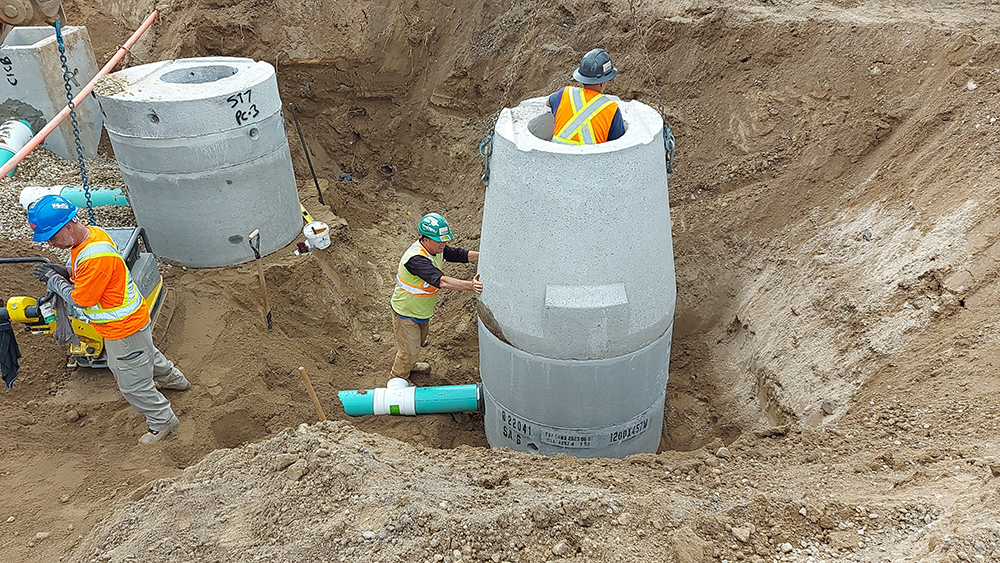
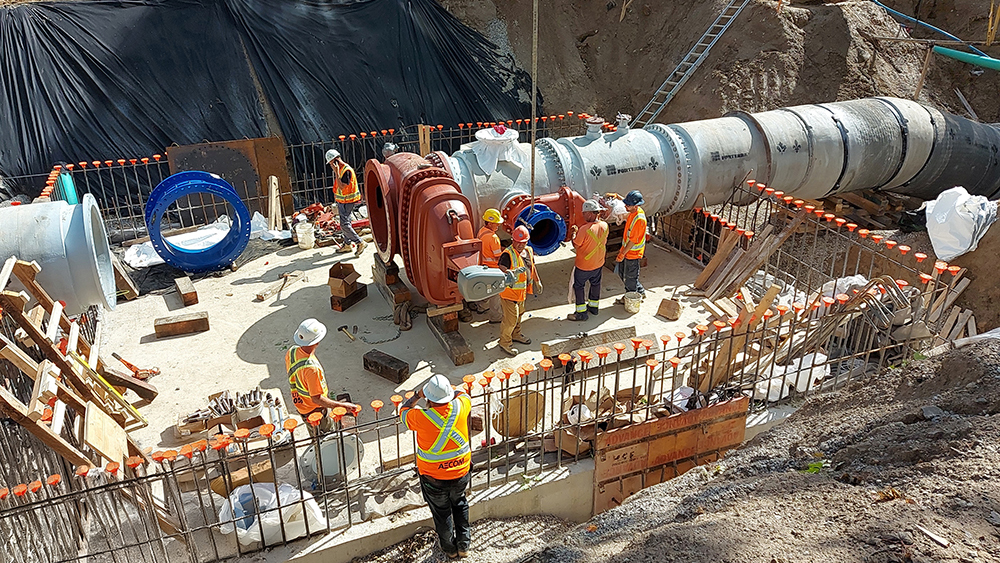
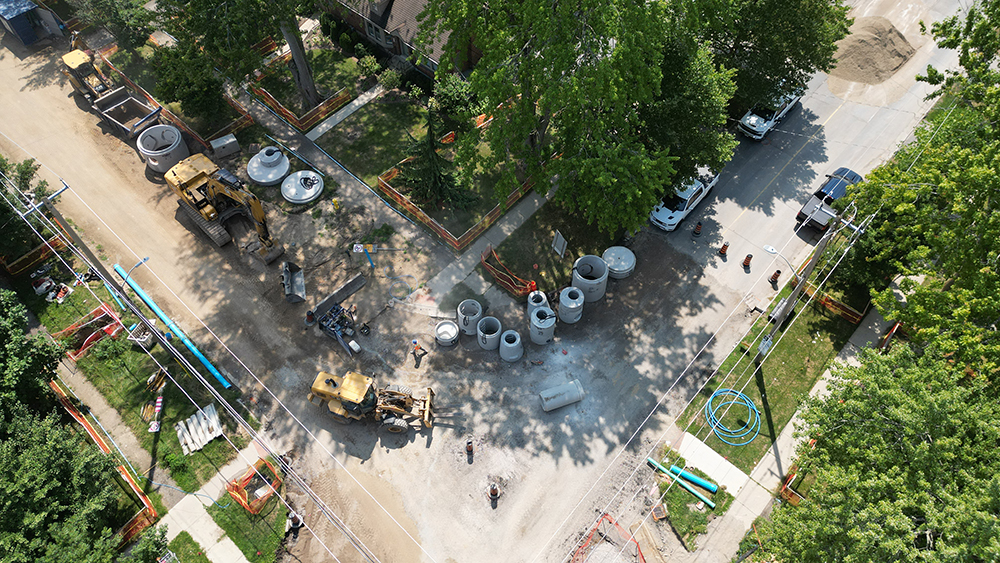
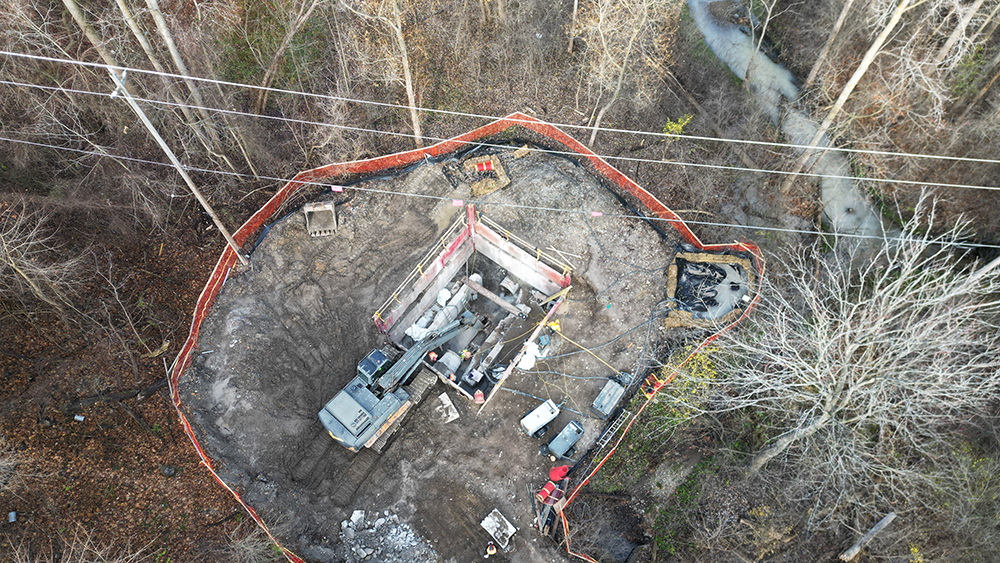
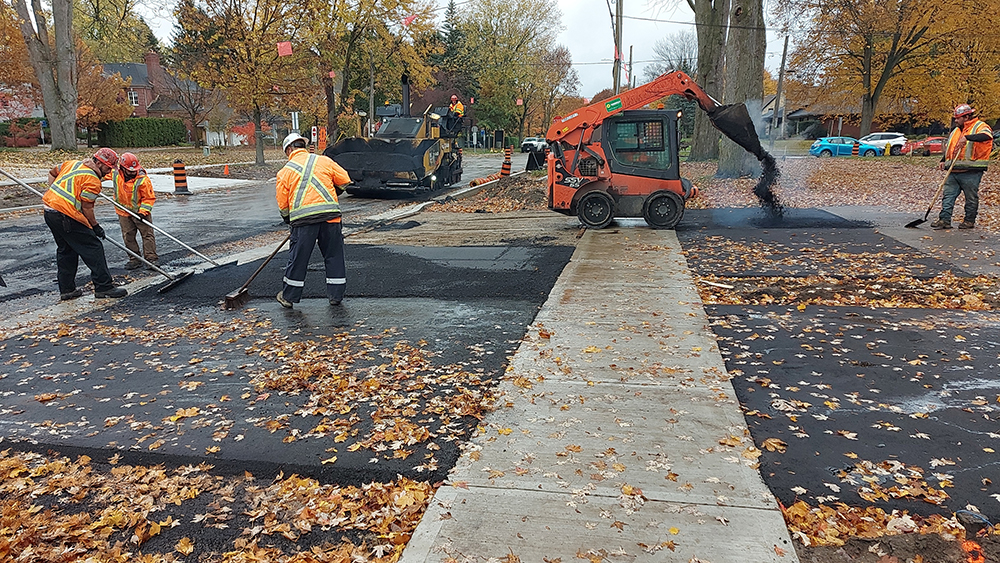
A major achievement was the successful and necessary relocation of the critical east/west 600mm watermain and the highly sensitive Chamber 13 from the constrained floodplain into the road right-of-way, a move that resolved significant conflicts with the proposed storm infrastructure. This required high precision to remove heavy concrete structures while keeping the water flowing for residents. The project management team proactively broke down the sheer magnitude and complex nature of the proposed upgrades into several manageable phases over multiple years, including the Regent/Maitland Valve Chamber in 2021, Regent/William Renewal in 2022, Regent/Fraser Renewal in 2023, and Chamber 13 Decommissioning in 2024. Dillon collaborated closely with the City to pre-purchase long lead items, such as a 1200mm valve, including main and by-pass actuators and surface mounted remote heads, that took 52 weeks to be delivered, ensuring the demanding multi-year schedule was maintained.
Innovation for the Environment
Protecting the neighborhood’s natural heritage was just as important as the engineering itself. Recognizing that standard digging methods would put century-old trees at risk, the team turned to a more delicate solution. Traditional digging often damages root systems, so the team deployed a trenchless construction program. By using “no-dig” technology to install new watermains and connections, the project successfully navigated around century-old root zones. This allowed for modern infrastructure upgrades while saving the neighborhood’s iconic green canopy.
A Better Quality of Life
Engineering is ultimately about people. Beyond the pipes and valves, the Old North Program delivered several wins for the community:
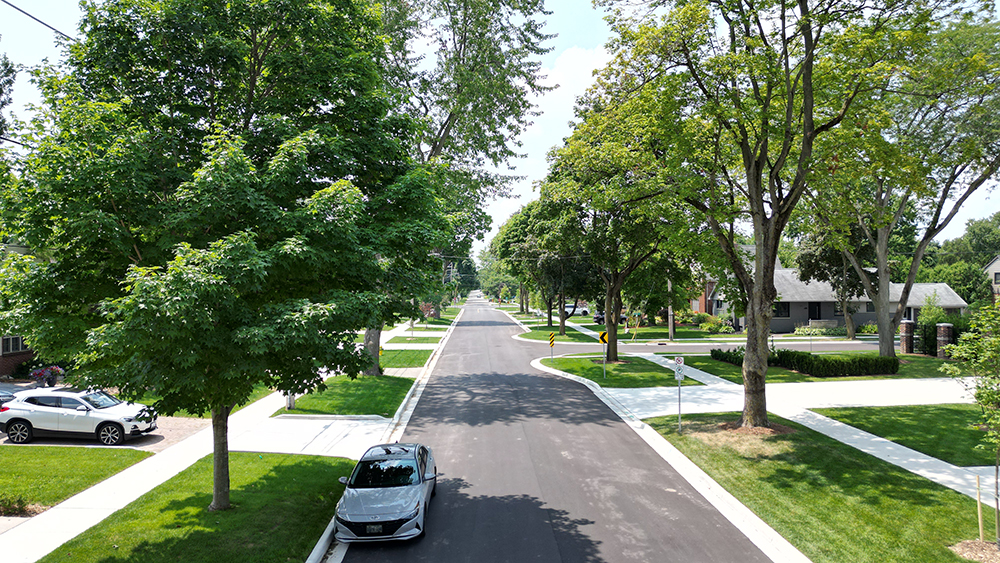
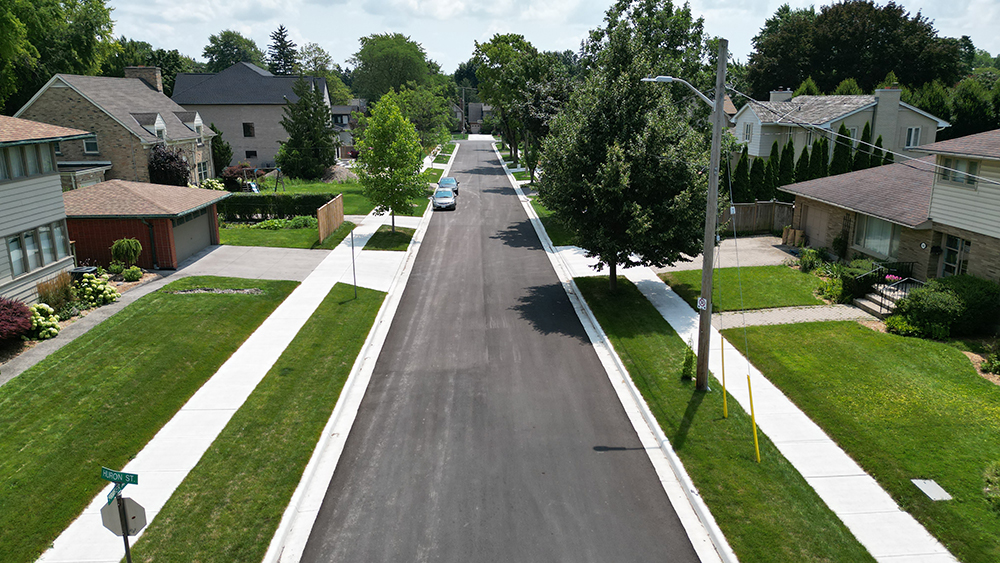
- Safer Streets: The project introduced a new cycle track on William Street, traffic-calming “bump-outs” on Regent Street, and upgraded sidewalks to make the area more walkable and bike-friendly.
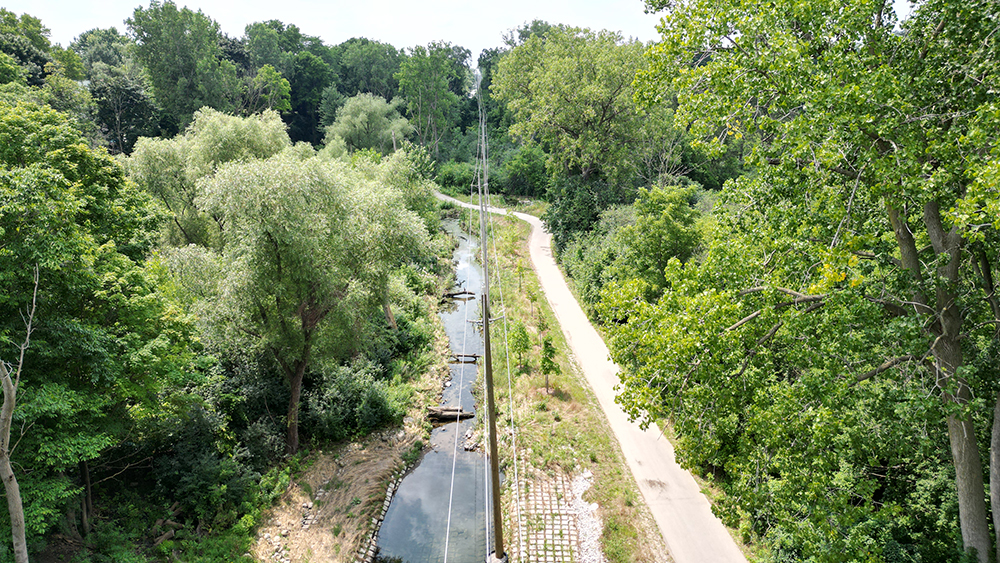
- Ecological Health: Working closely with the Upper Thames River Conservation Authority, the team improved the local shoreline and fish habitats. Only three years after construction, the area is already “renaturalizing,” showing that urban engineering and nature can thrive together.
The upgrades ultimately delivered a complete solution, addressing storm drainage issues with a revitalized storm system and outfall, realigned critical water infrastructure, and significantly improved the overall function of the neighbourhood’s essential infrastructure.
Project Details
Project Partners: City of London
Business Unit: Community Planning and Infrastructure
Service Offering: Linear Infrastructure