
Projects
How Constance Lake First Nation Overhauled Its Wastewater System
Constance Lake First Nation (CLFN) is a vibrant Indigenous community located 30 km west of Hearst in northern Ontario. Grounded in a deep respect for land and water, the community relies on resilient utility infrastructure to safeguard public health and preserve surrounding ecosystems. Facing demanding northern climatic conditions, CLFN manages essential municipal operations to maintain environmental safety and ensure sustainable living standards for its members.
The Challenge
In 2021, Constance Lake First Nation confronted an urgent public health crisis when an outbreak of Blastomycosis severely impacted community well-being. Local leadership directly linked the emergency to systemic failures within the community’s aging wastewater infrastructure. For over 15 years, the existing treatment system had failed to discharge treated effluent properly, causing stagnant, hazardous conditions to develop across local water assets.
The root cause of these compounding operational failures remained hidden beneath severe site constraints. The region’s extremely flat topography prevented natural gravity drainage, while poor historical grading and dense, overgrown vegetation concealed critical infrastructure defects. Hydraulic flows reaching the facility spiked to an unsustainable 2,000 cubic meters per day—an excessive volume for a small community.
Subsequent investigation revealed a complex web of structural deterioration:
- A buried, forgotten overflow manhole within the gravity collection system was allowing vast amounts of environmental surface water to flood the primary pumping station.
- A damaged overflow pipe with a failed end flap gate was actively harvesting external runoff and feeding it back into the sanitary network.
- Non-functional effluent pumps and a collapsed or heavily obstructed forcemain completely halted the movement of treated wastewater.
Facing daily operational risks and an ongoing health crisis, CLFN required a comprehensive infrastructure overhaul capable of withstand northern freezing cycles and strict federal compliance targets.
The Solution
To resolve these systemic failures, Constance Lake First Nation partnered with Dillon Consulting Limited to execute a multi-phase engineering and hydraulic remediation strategy. The project prioritized root-cause structural repairs, specialized process technology, and long-term operator safety.
Forensic Discovery and Hydraulic Remediation
Engineering teams initiated a thorough forensic investigation, retrieving archived water treatment drawings and locating buried infrastructure. Once the hidden overflow manhole was exposed, crews cleared overgrown vegetation, reshaped surrounding earthwork, and placed heavy riprap for durable erosion control. An end-of-pipe check valve was installed to permanently stop environmental backflow into the collection network.
Main Station Modernization and Effluent Bypass
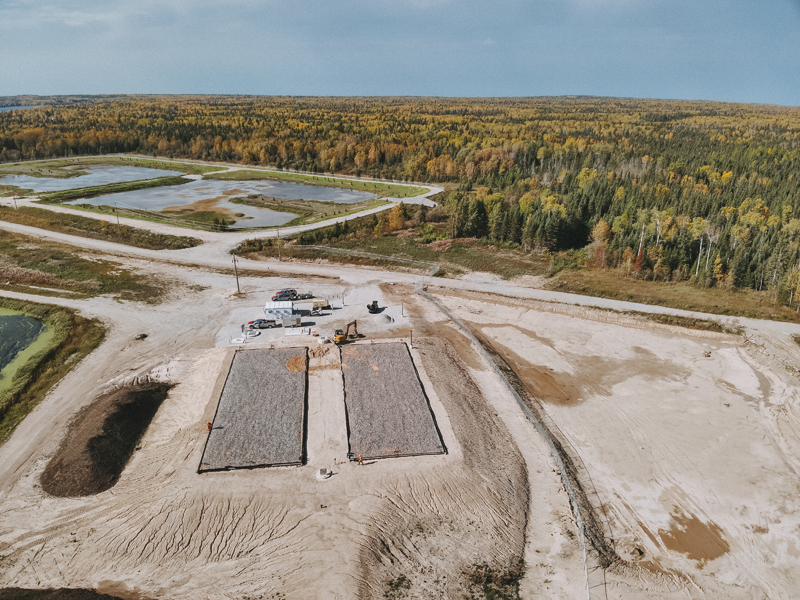
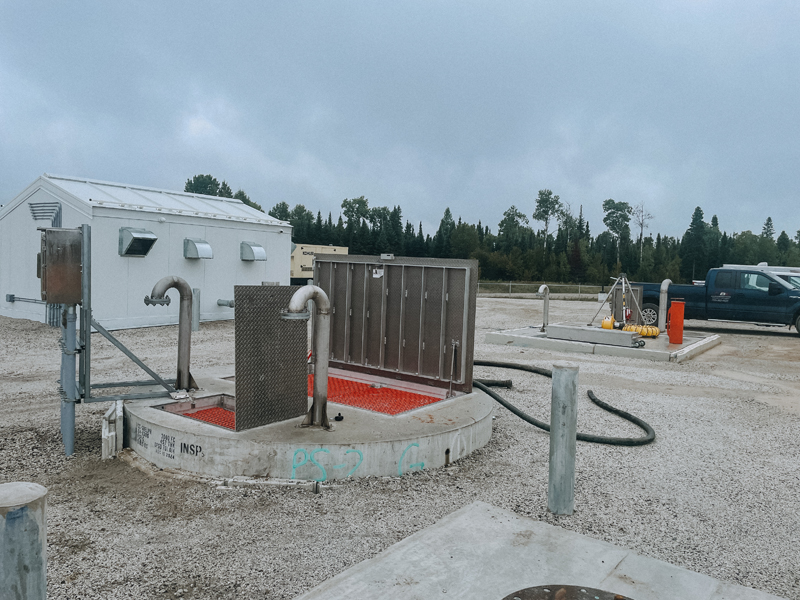
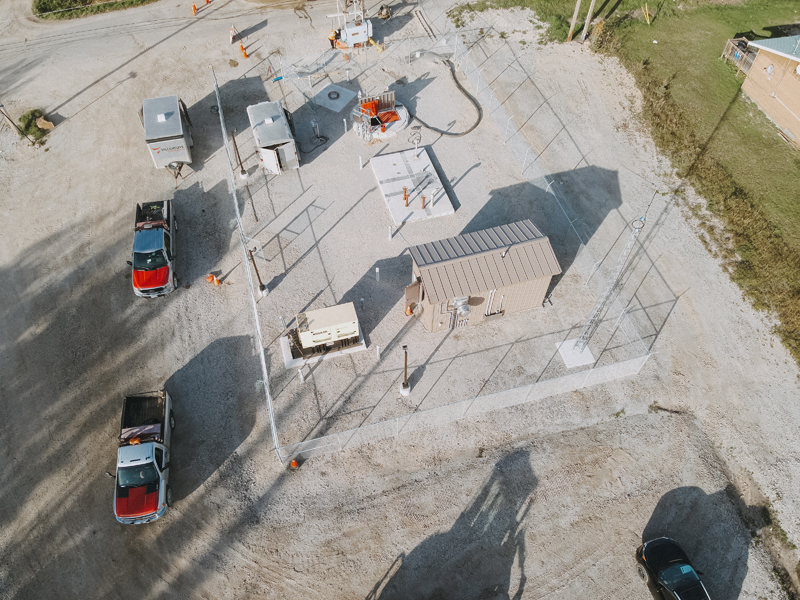
To handle peak flows, CLFN constructed a new, modernized wet well engineered for capacities up to 50 liters per second. Because the flat terrain precluded gravity flow, a dedicated effluent pumping station and a brand-new effluent forcemain were installed to bypass the collapsed pipework, enabling direct, controlled pumping from the storage lagoons into advanced treatment units.
Advanced SAGR Cold-Climate Nitrification
At the core of the biological upgrade is a Cold Water Post-Lagoon Nitrification Submerged Attached-Growth Reactor (SAGR) system. Tailored for extreme northern winter conditions, the SAGR beds incorporate a layer of repurposed wood chips as sustainable thermal insulation. A custom recirculation system was integrated to allow continuous biological activity and strategic cell-to-cell pumping during non-discharge storage periods.
Ecological Integration and Worker Safety
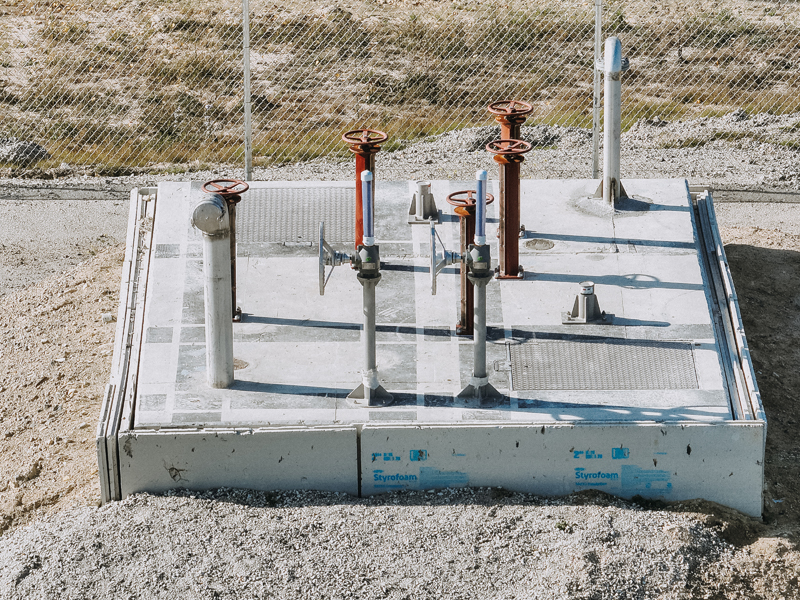
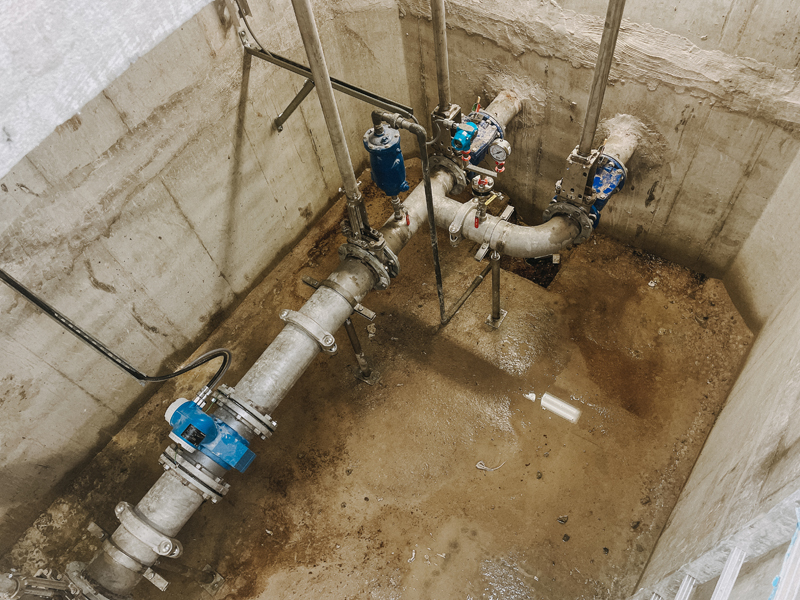
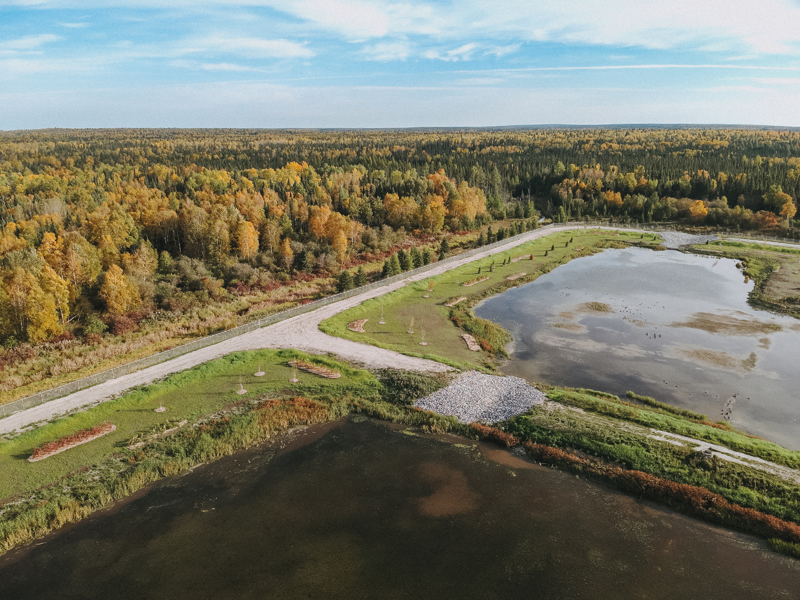
CLFN repurposed two decommissioned lagoon cells into managed wetlands, establishing a natural biological process for long-term sludge management while restoring local biodiversity. Additionally, the site architecture converted maintenance spaces into dry valve and metering chambers, allowing local utility personnel to service equipment safely without entering contaminated wet wells.
The Results
By leading this infrastructure transformation, Constance Lake First Nation permanently eliminated the environmental drivers of the Blastomycosis outbreak, transitioning the community from emergency crisis response to sustained public safety.
Precision Environmental Compliance
The modernized treatment process consistently exceeds federal environmental discharge standards:
- Ammonia Reduction: Engineered to maintain unionized ammonia concentrations below 0.1 mg/L prior to release.
- Controlled Seasonal Discharge: Recirculation controls enable precise seasonal discharge windows during spring and fall, ensuring effluent meets peak quality targets before entering the watershed.
- Flow Stabilization: Eliminating environmental backflow restored system design capacities and prevented unpermitted lagoon overflows.
Infrastructure Resilience and Growth
The updated facility provides robust operational reliability and built-in capacity for future generations:
- Population Scalability: Designed with continuous capacity to support a future population of 1,226, unlocking expansion potential for new housing developments.
- Power Redundancy: Equipped with high-efficiency Variable Frequency Drives (VFDs) alongside dual 80 kW and 125 kW backup generators to ensure uninterrupted operation during power disruptions.
- Operational Flexibility: Granular cell selection controls empower local operators to handle routine maintenance and non-discharge storage with complete confidence.
Through targeted infrastructure investments and sustainable design choices, Constance Lake First Nation has secured a clean, reliable, and resilient utility foundation that protects public health and safeguards the local environment for decades to come.
Awards
- Wastewater (Small Project) Award, Water Canada, 2026
- Water Resources Award of Excellence, Canadian Consulting Engineer, 2026
Project Details
Project Partners: Constance Lake First Nation
Business Unit: Community Planning and Infrastructure
Service Offering: Treatment and Pumping